Testosterone Optimization
Provider-supervised testosterone therapy for eligible men with symptoms and clinically appropriate lab findings.
Lab-confirmed testosterone optimization for men with low T or declining drive. Provider-supervised testosterone replacement and fertility-preserving enclomiphene — prescribed only when medically appropriate.

Treatment requires provider review and lab confirmation, included in your program. Not everyone qualifies.
Hormone therapy is prescribed only when clinically appropriate, following evaluation and lab review by a licensed provider. Not all patients qualify.
The Longevity Score is an educational estimate, not a diagnostic tool.
Compare clinically supervised options. Final treatment depends on symptoms, labs, safety profile, and provider review.
Best for: men with symptoms and clinically low testosterone who want the most direct, provider-supervised protocol.

Provider-supervised testosterone therapy for eligible men with symptoms and clinically appropriate lab findings.

An oral, fertility-preserving option that raises your body’s own testosterone production — a needle-free alternative to TRT.
Compounded medications are not FDA-approved and require provider review. Testosterone and enclomiphene are prescribed only when clinically appropriate.
Hormone optimization is guided by symptoms and biomarkers together. Standard labs are included in the Men's Health program and checked every 3 months to keep your protocol calibrated and safe. Already have recent labs? Upload them to your patient portal for provider review. Want a deeper dive? Go beyond the standard panel to understand your cardiac and metabolic health in detail.
Men's Comprehensive Health PanelTestosterone and enclomiphene work differently. A licensed provider helps determine the right fit based on your labs and goals.
Therapies are sometimes used together with add-ons (HCG, anastrozole) when medically appropriate. The licensed provider will recommend the right approach based on your labs and goals.
Supportive medications a provider may add to your testosterone protocol when clinically appropriate. Not standalone therapies.
Preserves testicular function & fertility on TRT
Mimics LH to keep the testes producing testosterone and sperm during therapy — helps prevent testicular shrinkage for men who want to preserve fertility.
Manages estradiol on testosterone therapy
An aromatase inhibitor used selectively when labs show elevated estradiol causing symptoms like water retention or tenderness — only when warranted, never by default.
Add-ons require a base hormone program and are prescribed only when medically appropriate after provider review. Essential monitoring labs are included; the comprehensive panel is an optional upgrade.
Research suggests testosterone therapy may improve selected outcomes in appropriately diagnosed and monitored men, but benefits and risks vary by individual.
Yes. Hormone optimization requires lab confirmation of low testosterone before a provider can prescribe — a one-time lab draw to confirm low testosterone. Enclomiphene candidates also need an LH/FSH baseline. If you don't have recent labs, the Your essential hormone panel (6–7 markers needed to prescribe and monitor safely) is included in your program. The Men's Hormone Health Panel ($170) — adding LH, FSH, PSA, lipids, metabolic, full hormone profile, plus cardiac and longevity markers — is an optional upgrade billed separately. Additional charges apply.
Your program includes a small monitoring lab panel, checked every 3 months — quarterly labs are a required part of safe hormone therapy, not an optional add-on. If you have recent outside labs, you can upload them to your patient portal for provider review, and your provider may use them where clinically appropriate. Deeper panels available through our labs page are optional, billed separately, and non-refundable once collected.
Provider check-ins are typically every 3 months. Some check-ins may be asynchronous (non-face-to-face) — handled through secure messaging and review of your information. Where a synchronous (live) visit is required by state law for GLP-1 or hormone programs, it's conducted by phone call. For TRT specifically, synchronous check-ins are quarterly and are done as video visits.
If your testosterone is in the normal range and you have no clinical symptoms, TRT is not indicated. You'll receive a free consultation and you will not be charged for any medication or program fee. If you only had the essential labs your provider ordered to qualify, those are included at no cost. If you chose to add the Men's Hormone Health Panel ($170), that panel is non-refundable once the labs have been performed. We do not prescribe testosterone to men with normal levels — that's not optimization, that's supraphysiological dosing, and it carries significantly higher risk.
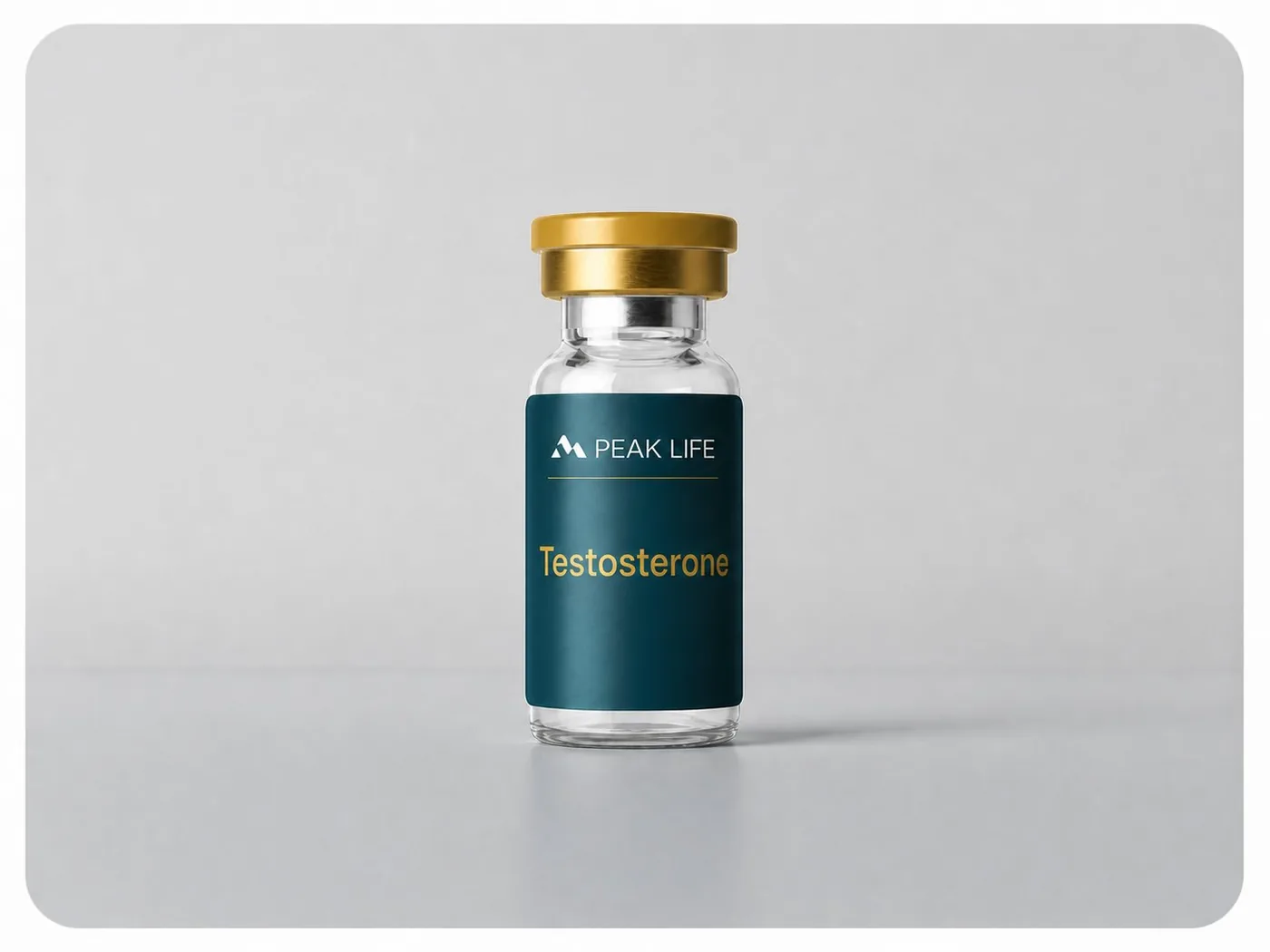
The active ingredient is bioidentical testosterone — chemically identical to what your body produces. The difference is that compounded testosterone is prepared by a licensed 503A pharmacy on a per-prescription basis, which allows for custom dosing and delivery formats not available through standard branded products.
Most men report improved energy and mental clarity within 3–6 weeks. Libido and cognitive effects are usually first. Body composition changes (lean muscle, fat loss) typically take 3–6 months. Enclomiphene works by raising your own testosterone — most men notice energy and libido changes within 4–6 weeks, with fuller effects over 2–3 months.
Yes, in some cases. TRT is often paired with HCG (to preserve testicular function and fertility) or anastrozole (to manage estradiol). Your provider will recommend based on your full lab panel and goals. Add-ons are priced separately and added to your base program.
TRT suppresses your body's natural testosterone production, which significantly reduces sperm count in most men. If you may want biological children in the future, discuss fertility-preserving alternatives with your provider before starting — options include HCG (which preserves testicular function), enclomiphene (which raises testosterone without suppressing sperm), or sperm banking before therapy begins. This is a serious consideration for men under 40.
Your body may take 3–12 months to resume natural testosterone production after discontinuing TRT — sometimes longer. Symptoms typically return during this window. We taper carefully when patients choose to discontinue, and can prescribe restart protocols (HCG, clomiphene) to support recovery of natural production. This is a topic to discuss with your provider before starting therapy.
One transparent monthly price covers your provider consultations, all medication and supplies, prescription writing and dose adjustments, monthly fulfillment from a licensed 503A pharmacy, ongoing provider access, quarterly clinical reviews with the essential labs needed to monitor your therapy, order-status updates and shipment tracking, and free shipping nationwide — all in. Your program is a simple monthly subscription you can cancel anytime with no fees. Want the full picture? The optional Men's Comprehensive Health Panel adds cardiac-risk and longevity biomarkers (ApoB, Lp(a), hs-CRP, HbA1c, IGF-1 and more) for a deeper baseline — and you can add recovery and performance support like NAD+ or glutathione anytime.
Yes. You'll get order-status updates and shipment tracking by email at every step — when your prescription is reviewed, when the pharmacy fills it, and when it ships — so you always know where your order is. Everything is also visible in your account.
Everything you need is included. Your medication ships with all required supplies — nothing extra to buy, and no per-order shipping fee. Free shipping is included on every order.
Testosterone therapy is a medical treatment with real risks, which is why it requires ongoing provider supervision and lab monitoring. The most common is an increase in red blood cell count (elevated hematocrit/polycythemia), which can thicken the blood and is the primary reason quarterly bloodwork is mandatory. Other potential effects include acne or oily skin, fluid retention, breast tenderness or enlargement, worsening of obstructive sleep apnea, mood or sleep changes, suppression of natural testosterone production, and reduced sperm production and fertility. Testosterone can also raise PSA and may worsen urinary symptoms in men with benign prostatic hyperplasia (BPH), so prostate monitoring is part of care. The FDA notes a possible association between testosterone use and cardiovascular events; your provider will weigh your individual cardiovascular risk before and during treatment. This list is not exhaustive — discuss your full history with your provider, and report new or severe symptoms promptly.
Testosterone therapy is not appropriate for everyone. It is generally contraindicated in men with active prostate cancer or male breast cancer, and is used with significant caution — or avoided — in men with untreated severe obstructive sleep apnea, uncontrolled heart failure, a recent cardiovascular event, an elevated hematocrit at baseline, or a known sensitivity to the formulation. Men who wish to preserve fertility or are actively trying to conceive should discuss alternatives, because TRT suppresses sperm production. A licensed provider determines eligibility individually based on your labs, symptoms, medical history, and current medications; not all applicants qualify.

Treatment options require provider review and may not be appropriate for everyone. Compounded medications are not FDA-approved. Hormone therapy requires appropriate lab evaluation, monitoring, and individualized risk assessment. Testosterone is not intended for athletic performance enhancement, anti-aging use in healthy men with normal testosterone, or treatment without clinical indication.
Low testosterone is measurable — and treatable. Start your visit in about five minutes.
Get Started →Prefer a deeper baseline? Add the Comprehensive Health PanelPrograms start at $129/mo. Includes provider consultation, prescription, fulfillment, ongoing support, and the essential labs to monitor your therapy. The comprehensive panel is an optional upgrade.
Restores testosterone to optimal physiological range in men with clinically low levels confirmed by lab work.
Bioidentical testosterone replaces what your body is no longer producing. The most-prescribed hormone optimization therapy in the U.S., with decades of clinical use.
Raises your body's own testosterone production while preserving fertility — an oral alternative to injectable TRT.
A selective estrogen receptor modulator (SERM) that signals the pituitary to release more LH and FSH — stimulating your testes to produce more of your own testosterone while maintaining sperm production and testicular size.
Hormone optimization is a clinical therapy, not a lifestyle product. Eligibility is determined by lab values plus medical history. Most men 35+ with classic symptoms (fatigue, low drive, weight gain, poor sleep) qualify, but lab confirmation is required.
Not all patients qualify for hormone therapy. Treatment requires evaluation by a licensed provider and ongoing lab monitoring.
All three conditions must be met:
No clinic visits. No insurance hassles. Four steps, fully provider-supervised.
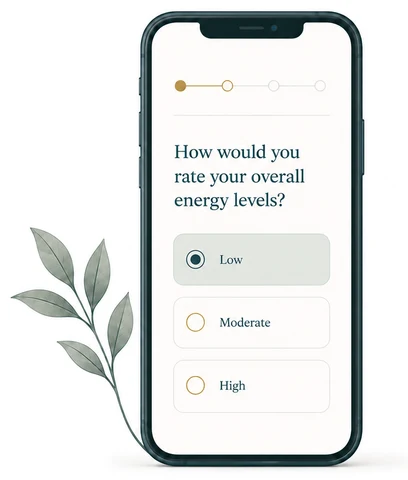
Complete a 5-minute questionnaire covering your goals, symptoms, medications, and history. Upload recent labs or we'll order them.
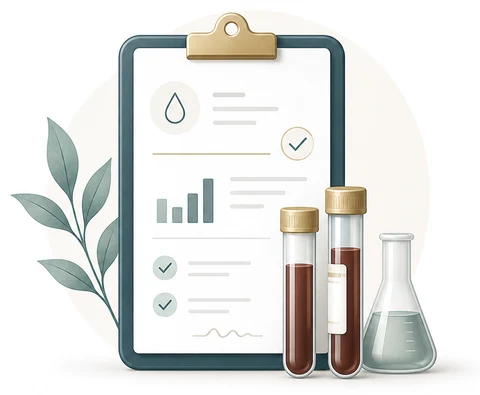
We order your essential hormone panel (6–7 markers) — included in your program. A one-time draw at any Quest location confirms low T.
A licensed provider reviews your intake and labs via async consult or video visit. You'll never pay for a denied prescription.
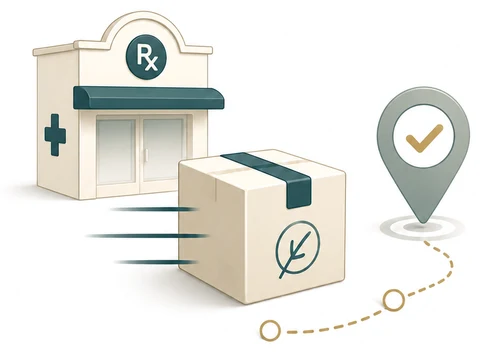
If approved, your medication ships from a licensed 503A pharmacy in a discreet package — free shipping on every order.
Fatigue, low drive, and lost strength are not just aging — they are measurable. Your free assessment estimates where your hormones and biological age stand, then shows whether optimization is right for you.
TRT is well-established but not risk-free. Here's what the research actually says about the most common concerns — directly, without softening.
The 2023 TRAVERSE trial (NEJM) followed 5,200+ men on TRT for a median of 22 months and found no significant increase in major cardiovascular events versus placebo. Earlier signals of harm were not confirmed. Hematocrit (red blood cell count) is monitored quarterly to manage the small risk of polycythemia.
Modern evidence does not support the older concern that TRT causes prostate cancer in men with normal PSA at baseline. PSA is checked at intake and quarterly during therapy. Active prostate cancer is a disqualifying condition.
The Bhasin et al. testosterone trials (NEJM, 2018) showed older men with low T who received TRT had measurable improvements in stair-climbing strength, leg-press power, and self-reported physical function versus placebo over 12 months. The benefit was consistent enough to translate to real-world activities of daily living — particularly relevant for men 50+ concerned about long-term independence.
This is the single most important concern for men under 40. TRT shuts down endogenous testosterone production, which reduces sperm count — usually significantly. If you may want children in the future, discuss fertility-preserving alternatives (HCG, enclomiphene, sperm banking) with your provider before starting.
Therapies are sometimes used together with add-ons (HCG, anastrozole) when medically appropriate. The licensed provider will recommend the right approach based on your labs and goals.
Supportive medications a provider may add to your testosterone protocol when clinically appropriate — never standalone therapies.
Preserves testicular function & fertility on TRT.
Manages elevated estradiol when labs indicate.
Add-ons require a base hormone program and are prescribed only when medically appropriate after provider review.
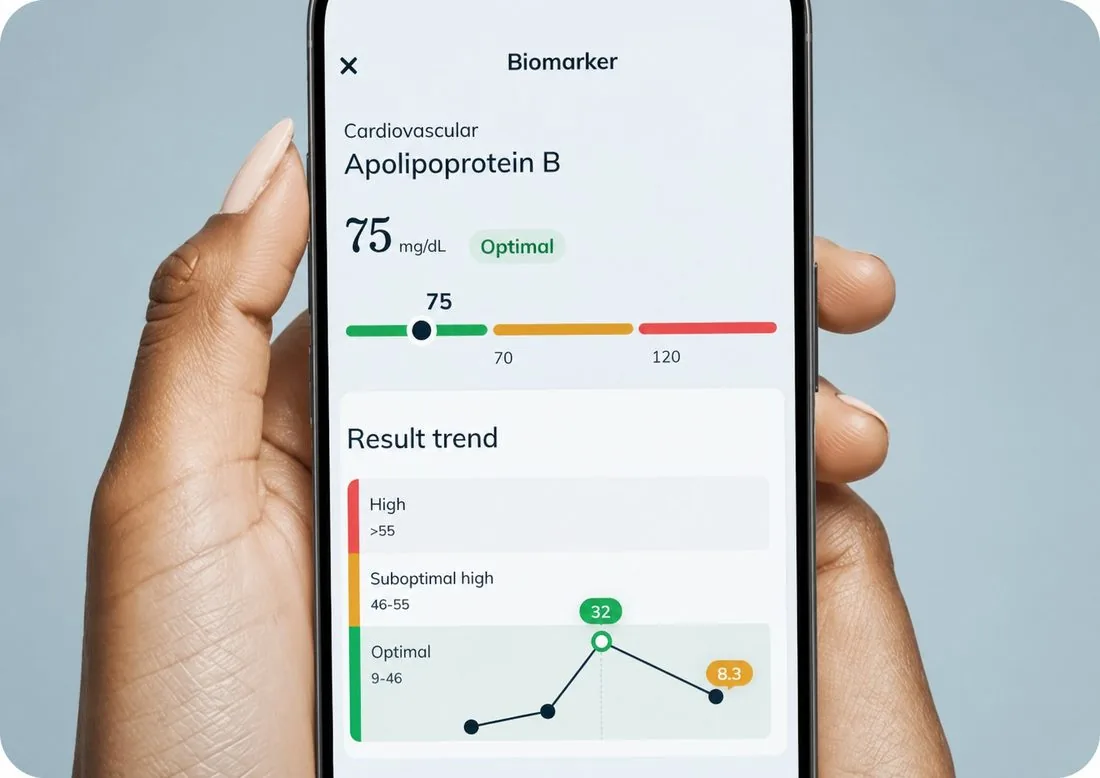
Your program includes the essential labs a provider needs to prescribe and monitor safely. Want a clearer picture of your health? Add the Comprehensive Men's Health Panel for a deeper read — cardiac and longevity markers included: total & free testosterone, estradiol, SHBG, DHEA-S, LH, FSH, IGF-1, ApoB, Lp(a), hs-CRP, PSA, and a full metabolic panel.
Hormonal decline is gradual — but it compounds. Catching it early and treating it appropriately preserves muscle, mood, drive, and metabolic health into your 50s, 60s, and beyond. Start with a free longevity assessment, or check eligibility with a licensed provider.