Provider-supervised hormone therapy for perimenopause and menopause. Estradiol and progesterone — sold together as a bundle or individually — to address hot flashes, sleep, mood, and more. Prescribed only when medically appropriate.
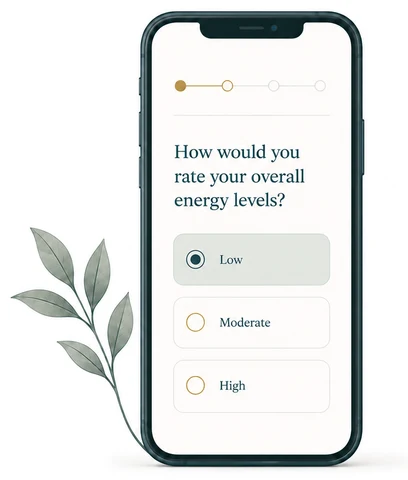
1Complete intakeShare goals, symptoms, medications, and medical history. Upload recent labs if you have them.
2Provider reviewA licensed provider reviews your intake and symptoms to determine whether therapy is appropriate.
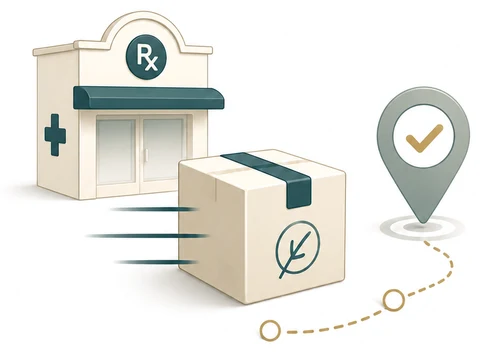
3First shipment & ongoing careMedication ships from a licensed 503A pharmacy. Dose adjustments and provider check-ins are included on therapy.
Research + safety
Responsible hormone care requires monitoring.
Research supports hormone therapy for menopausal symptoms in appropriately selected women, but benefits and risks vary by individual, timing, and route.
Timing & route Therapy started near menopause has a more favorable profile; transdermal estradiol lowers clot risk vs. oral.
Breast & clot history Hormone-sensitive cancer, clot or stroke history, and unexplained bleeding are reviewed before treatment.
Ongoing monitoring Symptoms, blood pressure, and routine screening continue during therapy.
Questions
Women's health Q/A.
What's the difference between perimenopause and menopause?
Perimenopause is the transition before menopause — often in your 40s — when hormones fluctuate and symptoms begin. Menopause is 12 months without a period. Hormone therapy can help in both stages.
Is bioidentical hormone therapy safe?
"Bioidentical" means the estradiol and progesterone are identical to what your body makes. For healthy women starting near menopause, benefits often outweigh risks. Older WHI concerns were tied to a specific regimen in much older women. Your provider reviews your history to choose the safest approach.
Should I start with the bundle or a single hormone?
Most women with a uterus and broad symptoms start with the HRT Bundle (estradiol + progesterone). If you've had a hysterectomy, estradiol alone may fit. If your concern is mainly sleep or skin/hair, a single therapy may be the right start.
Do I need labs before starting?
Usually not. Menopausal hormone therapy is prescribed based on your symptoms and history — your symptom picture, not a lab value, is what drives the decision for most women. Labs are optional and available separately if you or your provider want a fuller picture: the Women's Hormone Health Panel ($170) for a hormone and metabolic baseline, or the Comprehensive Women's Health Panel ($275), which adds cardiac and longevity markers.
Can I track my order and shipment?
Yes. You'll get order-status updates and shipment tracking by email at every step — when your prescription is reviewed, when the pharmacy fills it, and when it ships — so you always know where your order is. Everything is also visible in your account.
Are supplies included, or do I buy them separately?
Everything you need is included. Your medication ships with all required supplies — nothing extra to buy, and no per-order shipping fee. Free shipping is included on every order.
How long until I feel better?
Many women notice fewer hot flashes and night sweats within 2–6 weeks; sleep and mood often improve in a similar window.
What are the risks and contraindications?
Common, usually temporary effects include breast tenderness, bloating, and spotting. Hormone therapy is generally avoided with active hormone-sensitive cancer, unexplained vaginal bleeding, or a history of clots or stroke. Transdermal estradiol lowers clot risk vs. oral. A provider determines whether it's right for you.
Regulatory and safety information
Treatment options require provider review and may not be appropriate for everyone. Compounded medications are not FDA-approved. Hormone therapy requires individualized risk assessment and ongoing monitoring. Therapy is prescribed only for appropriate clinical indications, not for use without medical need.
Feel like yourself again.
Hormone changes are treatable, not inevitable. Start your visit in about five minutes.
Held to a real standard of care Board-certified providers Licensed 503A pharmacy
Free shipping 3–5 day delivery & tracking
What we help with
Symptoms hormone therapy can address.
Perimenopause and menopause can affect almost everything. Here are the symptoms your provider most often treats — your plan is built around the ones that matter most to you.
Hot flashes & night sweats
Vasomotor symptoms are the hallmark of menopause — estradiol is the most effective treatment available.
Sleep disruption
Trouble falling or staying asleep, often tied to night sweats and falling progesterone.
Mood & irritability
Anxiety, low mood, and emotional swings linked to fluctuating hormones.
Brain fog
Difficulty concentrating and word-finding that many women notice in perimenopause.
Vaginal dryness & intimacy
Genitourinary symptoms that estrogen therapy can meaningfully improve.
Low libido
Reduced desire that can have hormonal contributors worth evaluating.
Skin, hair & acne
Hormonal acne, oily skin, and unwanted hair that can accompany changing hormones.
Irregular cycles
Changing, unpredictable periods during the perimenopause transition.
Not every symptom has a hormonal cause, and hormone therapy isn't right for everyone. A licensed provider reviews your history and symptoms to determine whether treatment is appropriate.
Bundle or build your own
Your hormone therapy.
The HRT Bundle is $149/mo
All included in your price
Licensed provider consultation & ongoing access
Prescription & dose adjustments
All medication & supplies
Free shipping, nationwide
Order status & shipment tracking
Simple monthly subscription — delay, pause, or cancel anytime, no fees.
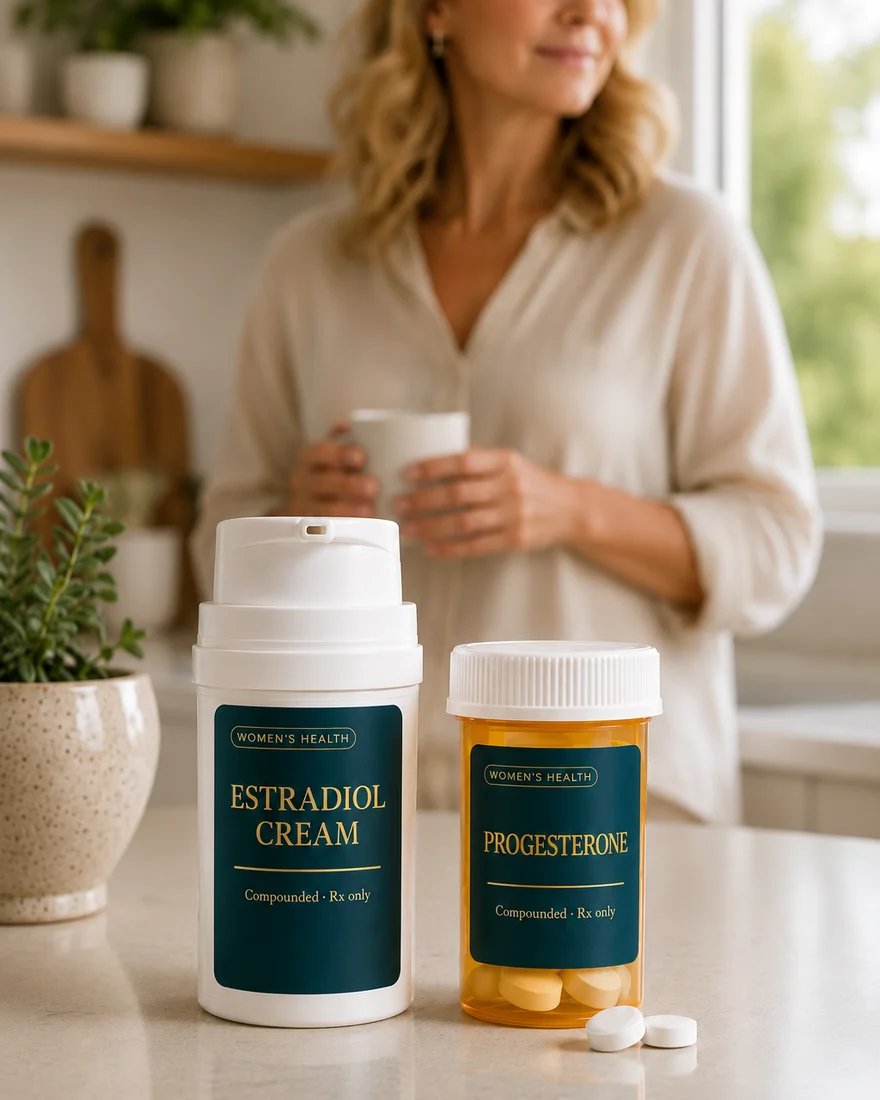
— estrogen and progesterone together, the most common foundation for menopause and perimenopause care. Prefer to start with one? Each therapy is also available individually. Includes provider consultation, prescription, fulfillment, and ongoing support — all in.
Most popular · Best value
*Image is illustrative only.
Vial is an illustration only (not actual product)Medication is compounded and dispensed by 503A compounding pharmacy.
HRT Bundle · Best value
HRT Bundle — Estrogen & Progesterone
Our foundational menopause & perimenopause protocol — estradiol and progesterone together, dosed to you. The most complete, best-value way to start.
DosingDaily, provider-set
First results2–6 weeks
Estradiol restores the estrogen your body is making less of, while progesterone balances it and protects the uterine lining. Together they address the broadest range of menopausal symptoms — hot flashes, night sweats, sleep, mood, and vaginal dryness.
Vial is an illustration only (not actual product)Medication is compounded and dispensed by 503A compounding pharmacy.
Estrogen therapy
Estradiol
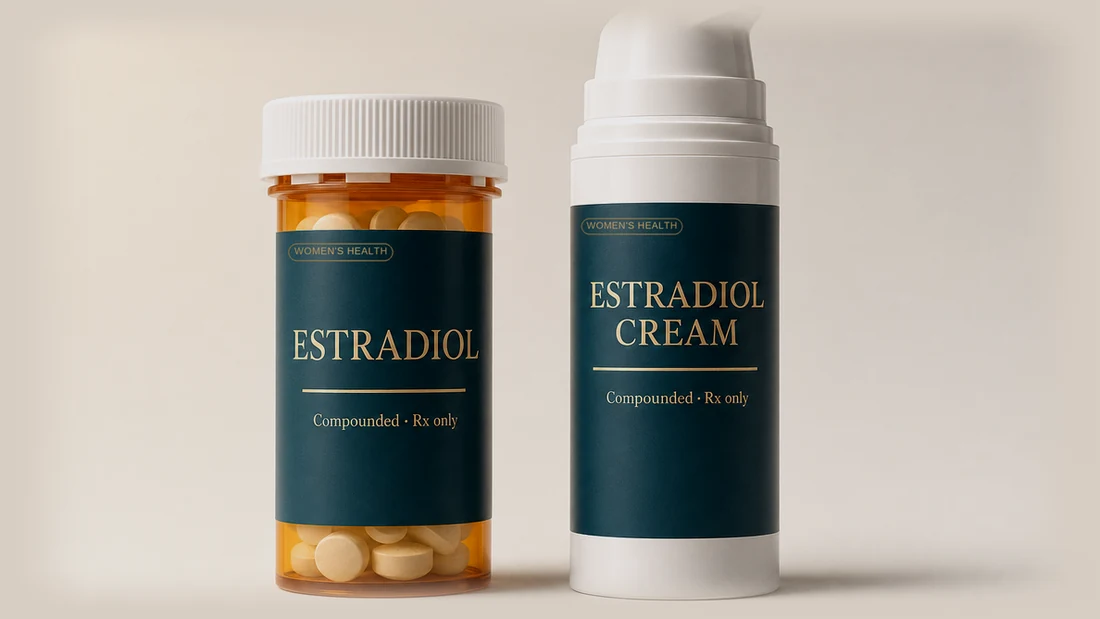
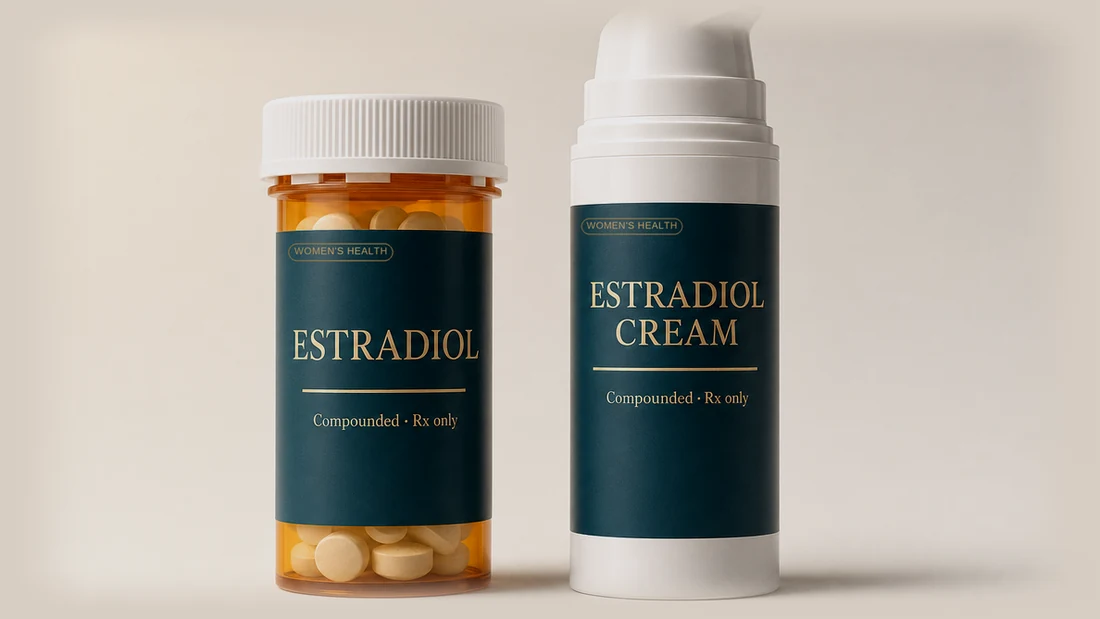
Bioidentical estradiol to address hot flashes, night sweats, sleep disruption, and vaginal dryness — available as a cream or tablet.
DosingDaily
First results2–6 weeks
Estradiol is the primary estrogen your ovaries produce less of during perimenopause and menopause. Replacing it is the most effective treatment for vasomotor symptoms (hot flashes and night sweats) and supports sleep, mood, and genitourinary health.
Bioidentical — chemically identical to your own estradiol
Cream or tablet, based on your preference and provider
Most effective therapy for hot flashes & night sweats
Vial is an illustration only (not actual product)Medication is compounded and dispensed by 503A compounding pharmacy.
Progesterone therapy
Progesterone
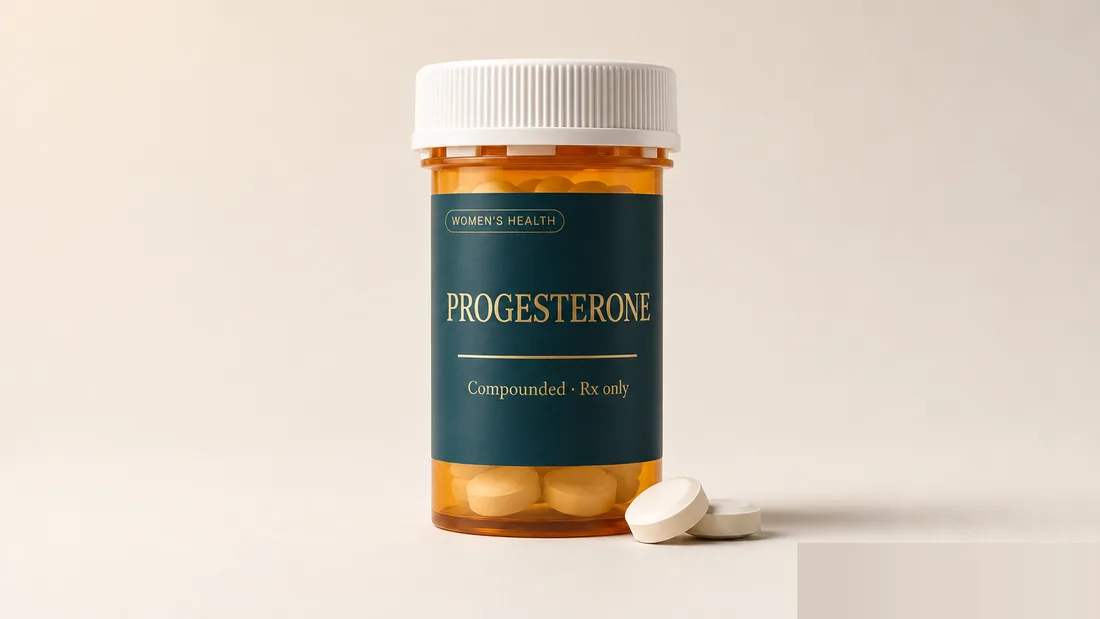
Bioidentical progesterone to balance estrogen, protect the uterine lining, and support sleep and calm.
DosingDaily, often at night
First results2–4 weeks
Progesterone balances estrogen and is essential for protecting the uterine lining in women with a uterus who take estrogen. Many women also find it supports sleep and a sense of calm when taken in the evening.
About compounded medications. Prescription products require an online medical consultation with a licensed healthcare provider. Medications are prescribed only when medically appropriate and are fulfilled by licensed pharmacies. Compounded medications are not reviewed or approved by the U.S. Food and Drug Administration. Pricing reflects medication only. Lab testing is optional and purchased separately.
Eligibility
Who qualifies.
Hormone therapy is a clinical treatment, not a lifestyle product. Eligibility is based on your symptoms, stage of life, and medical history. Most women in perimenopause or menopause with bothersome symptoms qualify, but a provider review is required.
Not all patients qualify for hormone therapy. Treatment requires evaluation by a licensed provider.
You likely qualify if
You're likely a candidate if:
You're in perimenopause or menopause — typically your 40s or 50s, with changing or absent periods (younger with surgical or premature menopause also qualifies).
You have bothersome symptoms — hot flashes, night sweats, sleep or mood changes, brain fog, vaginal dryness, or low libido.
No disqualifying conditions — active breast or other hormone-sensitive cancer, unexplained vaginal bleeding, history of blood clots or stroke, or active liver disease.
Don't have recent labs? That's fine — menopausal hormone therapy is usually started based on your symptoms and history, not a lab value. Lab testing is optional and available separately if you or your provider want a fuller picture. Final eligibility is determined by a licensed provider after reviewing your intake.
From intake to injection
How it works.
No clinic visits. No insurance hassles. Three steps, fully provider-supervised.
1
Complete your intake
Complete a 5-minute health questionnaire about your symptoms, history, and goals. Upload recent labs if you have them.
~5 minutes
2
Provider review & consult
A licensed provider reviews your intake, conducts an async consult or video visit, and determines whether therapy is appropriate for your symptoms and history. You'll never pay for a denied prescription.
Within 4–24 hours
3
First shipment & ongoing care
Medication ships from a licensed 503A pharmacy. Dose adjustments and provider check-ins are included for as long as you stay on therapy.
3–5 days from approval
Hormone changes are treatable, not inevitable
Feel like yourself again.
Hot flashes, sleep loss, and brain fog have a physiology — and a solution. Your free assessment maps your symptoms and biological age in minutes, then shows whether hormone therapy fits your body.
Hormone therapy is well-established but not right for everyone. Here's what the research actually says about the most common concerns — directly, without softening.
Timing matters
Cardiovascular: the "timing hypothesis"
Evidence suggests hormone therapy started within ~10 years of menopause or before age 60 has a more favorable cardiovascular profile than therapy started much later. Transdermal estradiol (cream/patch) is generally preferred over oral for women with clot or cardiovascular risk. Your provider weighs your individual timing and risk factors.
Tap for details
Breast health
Breast cancer: nuanced, not alarmist
The WHI study raised concerns, but later analysis showed the risk is small, tied largely to the specific progestin and duration used, and does not apply equally to all regimens. Estrogen-alone (in women without a uterus) was not associated with increased breast cancer risk in WHI. Active or prior hormone-sensitive breast cancer is a disqualifying condition; routine screening continues during therapy.
Tap for details
Proven benefits
Symptom relief & bone health
Estrogen therapy is the most effective treatment available for hot flashes and night sweats, and it also helps preserve bone density, reducing the risk of osteoporosis and fractures after menopause. For many women these quality-of-life and long-term benefits are the central reason to consider therapy.
Tap for details
Blood clots
Clot risk: route matters
Oral estrogen carries a small increased risk of blood clots. Transdermal estradiol (cream or patch) has a lower clot risk and is often preferred, especially for women with clot history, migraine with aura, or higher BMI. Your provider selects the route and dose with your risk profile in mind.
Tap for details
Side by side
Two hormones, working together.
Estrogen therapy
Estradiol
Progesterone therapy
Progesterone
What it does
Replaces declining estrogen — the core driver of menopausal symptoms
Balances estrogen and protects the uterine lining; supports sleep
Who it's for
Women with hot flashes, night sweats, sleep or mood changes, or vaginal dryness
Women taking estrogen who have a uterus, or those wanting sleep/calm support
Best taken
Daily — cream or tablet
Daily, often at night — 100mg or 200mg capsule
Primary outcome
Fewer hot flashes & night sweats, better sleep, mood, comfort
Women on estrogen with a uterus, or wanting sleep support
Best taken
Daily at night — 100mg or 200mg capsule
First results
2–4 weeks
Monthly cost
From $99/mo
Most women start with the HRT Bundle (estradiol + progesterone together). Your licensed provider will recommend the right approach based on your symptoms and history.
Go deeper on your health
Want to know more? Get the full picture.
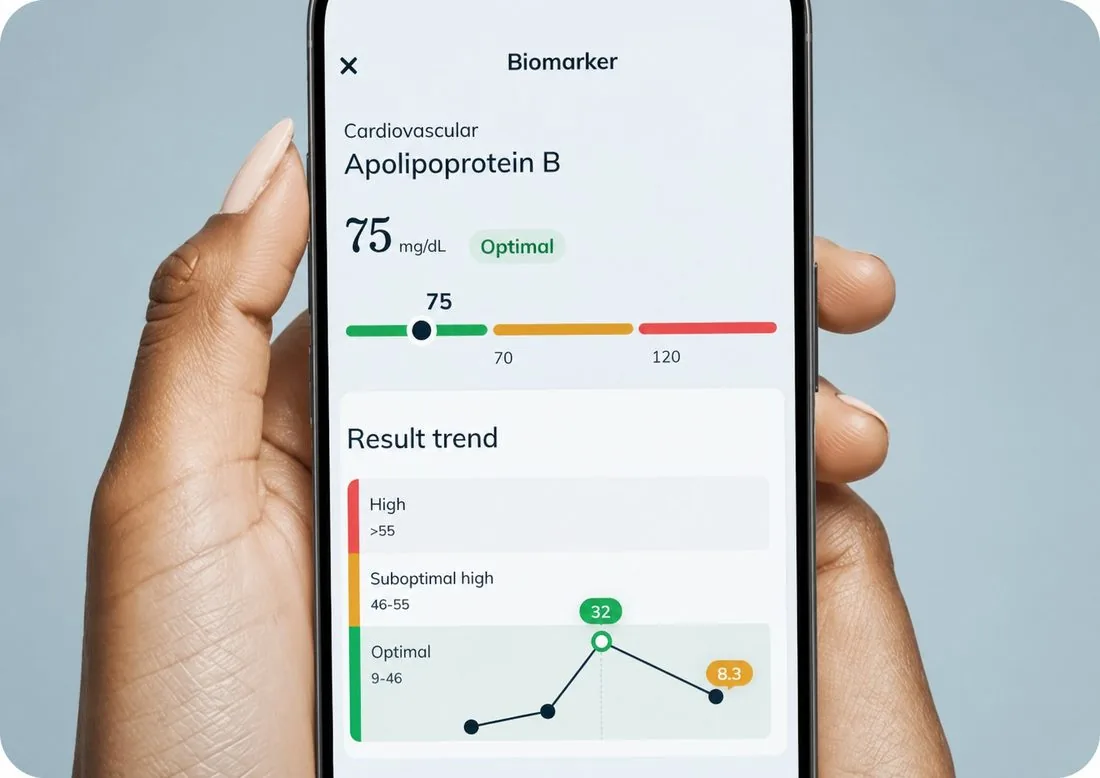
Menopausal hormone therapy is usually guided by your symptoms, so labs aren't required to start. If you or your provider want a fuller picture, two panels are available separately — the Women's Hormone Health Panel for a hormone and metabolic baseline, or the Comprehensive Women's Health Panel for a deeper read with cardiac and longevity markers.
What's the difference between perimenopause and menopause?
Perimenopause is the transition leading up to menopause — often starting in your 40s — when hormones fluctuate and symptoms like irregular periods, hot flashes, and sleep changes begin. Menopause is defined as 12 consecutive months without a period. Hormone therapy can help during both stages; your provider tailors the approach to where you are.
Is bioidentical hormone therapy safe? I've heard mixed things.
"Bioidentical" simply means the estradiol and progesterone are chemically identical to what your body makes. The safety picture is nuanced: for healthy women who start therapy near menopause (within ~10 years or before age 60), the benefits often outweigh the risks. The older WHI concerns were tied largely to a specific oral regimen started in much older women. Your provider reviews your personal history to determine whether therapy is appropriate and which form and route are safest for you.
Should I start with the bundle or a single hormone?
Most women with a uterus who have broad menopausal symptoms start with the HRT Bundle (estradiol + progesterone) — estrogen treats the symptoms, and progesterone protects the uterine lining. If you've had a hysterectomy, estradiol alone may be appropriate. If your main concern is sleep, or skin/hair, a single therapy may be the right starting point. Your provider will recommend based on your symptoms and history.
Do I need labs before starting?
Usually not. Menopausal hormone therapy is prescribed based on your symptoms and history — your symptom picture, not a lab value, is what drives the decision for most women. Labs are optional and available separately if you or your provider want a fuller picture: the Women's Hormone Health Panel ($170) for a hormone and metabolic baseline, or the Comprehensive Women's Health Panel ($275), which adds cardiac and longevity markers.
How long until I feel better?
Many women notice improvement in hot flashes and night sweats within 2–6 weeks. Sleep and mood often improve in a similar window. Vaginal and genitourinary symptoms can take a bit longer. Your provider adjusts your dose along the way.
Cream, tablet, or capsule — which form will I get?
It depends on the hormone and your needs. Estradiol comes as a cream or tablet; transdermal cream is often preferred for women with clot or cardiovascular risk. Progesterone is a capsule (100mg or 200mg), usually taken at night. Your provider selects the form and dose, and these can be adjusted over time.
What's included in the monthly cost?
Provider consultations, prescription and dose adjustments, monthly fulfillment from a licensed 503A pharmacy, ongoing provider access for questions or side effects, and clinical review. Free shipping is included on every order. Lab testing is optional and purchased separately.
What are the risks and side effects?
Hormone therapy is a medical treatment with real but generally manageable risks. Common, usually temporary effects include breast tenderness, bloating, spotting or irregular bleeding, mood changes, and headache. More serious considerations include a small increased risk of blood clots (lower with transdermal estradiol than oral), and — depending on the regimen and how long after menopause it's started — cardiovascular and breast-health considerations your provider will discuss. Report unusual bleeding, severe headaches, leg swelling, or chest symptoms promptly. This list is not exhaustive.
Who should not use hormone therapy? (Contraindications)
Hormone therapy is generally avoided in women with active or prior hormone-sensitive cancer (such as certain breast cancers), unexplained vaginal bleeding, a history of blood clots, stroke, or heart attack, active liver disease, or a known sensitivity to the formulation. It's used with added caution in women with migraine with aura, clot risk factors, or a long interval since menopause. A licensed provider determines eligibility individually based on your symptoms, history, and medications; not everyone qualifies.
Who fills my prescription?
If a licensed provider prescribes medication for you, your prescription is filled by Strive Pharmacy, a state-licensed, LegitScript-certified 503A compounding pharmacy located in Gilbert, AZ. For pharmacy and medication questions — shipping status, storage, or handling — contact Strive Pharmacy at 855-405-5993 or strivepharmacy.com. For clinical questions about your treatment, message your provider through the patient portal. For account or billing questions, contact support@reachpeaklife.com.
The next 10 years start now.
Hormonal decline is gradual — but it compounds. Catching it early and treating it appropriately preserves muscle, mood, drive, and metabolic health into your 50s, 60s, and beyond. Start with a free longevity assessment, or check eligibility with a licensed provider.